Home / IVF analyses
Two questions decide whether a transfer works.
Is the embryo chromosomally normal, and is the endometrium ready to receive it? We answer the first with preimplantation genetic testing and the second with endometrial analyses. Both are run in our own laboratory in Skopje, for reproductive centres and the patients they refer.
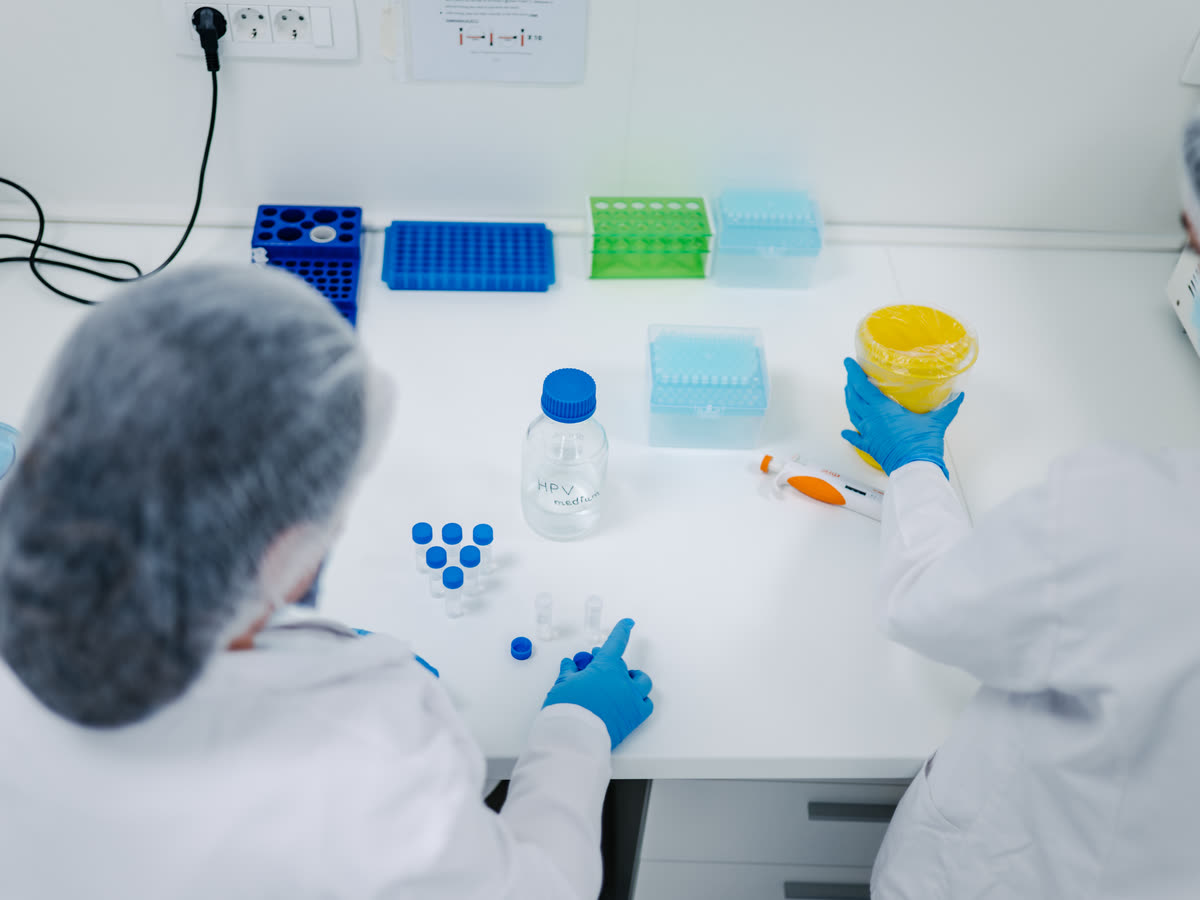 Our laboratory, Skopje
Embryo testing: choosing which embryo to transfer
Most embryos that fail to implant, or that end in early miscarriage, are chromosomally abnormal. Preimplantation genetic testing reads a few cells from each blastocyst before transfer, so the clinic can transfer the embryo most likely to become a healthy pregnancy, and avoid transferring ones that cannot. The biopsy is done by the embryologist at the clinic; we do the sequencing and the interpretation.
Five to eight cells taken from the part that later becomes the placenta
On the fifth or sixth day, the embryo is at the blastocyst stage: a fluid-filled structure made up of two different parts. The fetus develops from the inner cell mass, while the outer layer, called the trophectoderm, develops into the placenta. In the biopsy, cells are taken only from this outer layer.
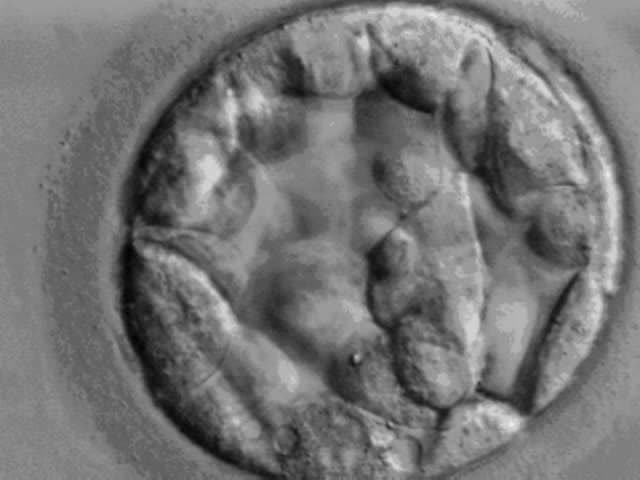
The embryos are vitrified while the analysis runs, and the chosen one is thawed for transfer in a later cycle. Biopsy technique and timing are the embryologist's; we supply the tubes and the protocol.
Counting the chromosomes in each embryo
An embryo with the wrong number of chromosomes usually fails to implant, or miscarries, or in a few cases results in a child with a chromosomal condition. PGT-A counts all 24 chromosomes in each blastocyst, so the clinic can rank embryos by the one factor that most often decides the outcome.
Aneuploidy rises steeply with maternal age, which is why the benefit is largest in older patients and in couples who have had repeated losses. It does not make a poor embryo good: it identifies which of the embryos already available are worth transferring.
- What is tested?The copy number of all 24 chromosomes, plus segmental gains and losses and an indication of mosaicism.
- Who it is forAdvanced maternal age, recurrent pregnancy loss, repeated implantation failure, severe male factor, and single embryo transfer policies.
- SampleTrophectoderm biopsy, 5 to 8 cells per blastocyst, in the tube we supply.
- ReportPer embryo: euploid, aneuploid or mosaic, with the chromosomes involved, sent to the referring centre.
When one parent carries a balanced chromosomal rearrangement
A balanced translocation or inversion does not affect the health of the person who carries it, because no genetic material is lost or gained; parts of the chromosomes are only rearranged.
However, when these chromosomes pair up during the formation of eggs or sperm, many of the resulting embryos can be missing a particular piece of a chromosome or have it doubled. This is one of the common hidden causes of recurrent miscarriage.
PGT-SR is genetic testing designed specifically around the family's particular chromosomal rearrangement. It makes it possible to tell embryos with an unbalanced chromosomal makeup from those with a balanced or normal one.
Couples are usually referred for this testing after karyotyping has already found a translocation, often after several earlier unsuccessful pregnancies.
- What is tested?Chromosomal imbalances arising from the previously identified chromosomal rearrangement, including structural changes of chromosome segments within the resolution of the method used, as well as the number of whole chromosomes.
- Who it is forCouples where one partner carries a balanced translocation, a Robertsonian translocation or an inversion.
- SampleTrophectoderm biopsy, and the parental karyotype or report describing the rearrangement.
- ReportPer embryo: balanced or normal, or unbalanced with the segments involved.
Testing for specific inherited monogenic diseases, with additional chromosomal analysis
When a couple is at risk of passing a specific monogenic disease on to their children, such as cystic fibrosis, spinal muscular atrophy, thalassaemia or an inherited cancer predisposition syndrome, PGT-M analyses each embryo for the specific genetic variant and identifies the embryos that are not affected by the disease.
Our PGT-M analysis is a comprehensive genetic examination: the result of the monogenic analysis is combined with the analysis for aneuploidies and structural chromosomal rearrangements. In this way, one biopsy answers all three genetic questions.
Laboratory preparation is needed before the IVF cycle starts, because the test is designed around the specific genetic variant present in the family.
- What is tested?The specific pathogenic genetic variant present in the family, together with the full PGT-A and PGT-SR analysis, carried out within the same test.
- Who the testing is forFor couples where both partners carry the same autosomal recessive genetic disease, for people who carry an autosomal dominant genetic disease, or for families in which a specific pathogenic genetic variant has already been identified.
- Before the IVF cycle startsA preparatory genetic analysis is carried out on both partners, and usually also on a family member who is affected or carries the genetic variant, so that the family's pathogenic variant can be traced and identified precisely in the embryo.
- Analysis reportFor each embryo separately, the report shows whether it is affected by the genetic disease, carries the genetic variant or is unaffected, together with the relevant findings of the chromosomal analysis.
Endometrium: assessing receptivity and health
For successful implantation, a chromosomally normal embryo is not enough on its own: the endometrium also has to be receptive at the optimal time for implantation.
When implantation fails repeatedly despite the transfer of good-quality embryos, the diagnostic assessment also turns to the endometrium, to establish:
- Whether the window of implantation is correctly timed to the embryo's stage of development.
- Whether the microbial composition of the endometrium is in the right balance.
- Whether there is subclinical inflammation of the endometrium.
These three parameters are assessed with three specialised analyses, which can all be done from a single endometrial biopsy sample.
Endometrial receptivity: establishing the optimal day for transfer
The endometrium has a limited period of receptivity, lasting roughly two days in each menstrual cycle. If the embryo is transferred outside this period, even an embryo with optimal developmental and genetic potential may fail to implant.
In a significant share of women, the window of implantation opens earlier or later than the standard planned transfer day. This shift in timing is even more common in patients with several unsuccessful IVF cycles.
- What is tested?The expression of implantation-related genes in the endometrial lining, which is used to determine how mature the endometrium is in time relative to the window of implantation.
- Who it is forPrimarily for patients who have had one or more unsuccessful transfers of morphologically good-quality embryos.
- SampleAn endometrial biopsy, taken by the IVF specialist on a precisely defined day of the preparatory cycle.
- ResultEither the endometrium is receptive, or a shift in the window of implantation is found, with a matching recommendation for correction, so that the next embryo transfer is scheduled within the patient's individual window of implantation.
The bacterial balance of the lining
The endometrium is not sterile. It carries its own bacterial community, and in a favourable one lactobacilli dominate heavily. When they do not, implantation and ongoing pregnancy rates are reported to be lower. Ginebiom sequences the bacteria present and reports the balance between them.
The point of measuring it is that it can be acted on: a dysbiotic result is usually managed with targeted treatment and probiotics before the next transfer, rather than simply transferring again and hoping.
- What is tested?The bacterial community of the endometrium by sequencing bacterial ribosomal RNA genes, reported as proportions.
- Who it is forRepeated implantation failure, recurrent loss, or alongside ERT when the lining is being investigated.
- SampleThe same endometrial biopsy used for ERT, so one procedure can serve both.
- ReportThe proportion of lactobacilli and the other species present, with whether the profile is favourable.
Looking for a silent inflammation
Chronic endometritis is a low-grade, persistent inflammation of the lining caused by bacteria. It usually produces no symptoms at all, which is why it goes unnoticed, and it is found disproportionately often in women with repeated implantation failure or recurrent miscarriage. It also responds to a course of the right antibiotic.
Endobiom looks specifically for the organisms that cause it, rather than describing the community as a whole. Ginebiom asks whether the balance is right; Endobiom asks whether a known troublemaker is present.
- What is tested?The bacteria most often responsible for chronic endometritis, including enterococci, enterobacteria, streptococci, staphylococci, mycoplasma, ureaplasma, chlamydia and neisseria.
- Who it is forRepeated implantation failure or recurrent pregnancy loss, especially where no other cause has been found.
- SampleThe same endometrial biopsy, so it can be combined with Ginebiom and ERT.
- ReportWhich pathogens were detected and at what level, so treatment can be targeted rather than empirical.
Two routes, depending on the sample
Embryo testing is arranged entirely between the laboratory and the clinic. Endometrial testing starts with the IVF specialist, but the patient can deal with us directly for the result if they prefer.
Embryo testing
Clinic to laboratory, via the embryologist
- The centre contacts us and we agree the analysis, the timing and the paperwork.
- We send the sampling materials and the protocol to the clinic.
- The embryologist performs the trophectoderm biopsy and prepares the tubes; the embryos are vitrified.
- The samples reach us and are sequenced and interpreted in Skopje.
- The report goes back to the referring centre, which discusses it with the couple and selects the embryo to transfer.
Endometrium testing
Through the IVF specialist, with the patient involved
- The IVF specialist decides which analyses are needed and on which day of the cycle to sample.
- The doctor takes the endometrial biopsy. The timing matters, particularly for ERT.
- The sample reaches us through the clinic, or the patient brings it in.
- We analyse it; one biopsy can serve ERT, Ginebiom and Endobiom together.
- The result can be explained here by our geneticist, or taken to the IVF specialist to plan the next transfer. Many patients do both.
Turnaround, sample transport and pricing are agreed per referral. Contact the laboratory before the cycle starts, especially for PGT-M, which needs a preparation step.
Common questions
Answers are general and educational. Panels, resolution, turnaround and prices are confirmed by the laboratory on enquiry.
Does the biopsy harm the embryo?
The cells are taken from the trophectoderm, the outer layer that becomes the placenta, not from the inner cell mass that becomes the baby. It is a routine step in modern IVF laboratories, performed by the embryologist on a day 5 or day 6 blastocyst.
Can a patient order these directly?
Embryo testing, no: it is arranged with the IVF centre, because the sample can only be taken in the embryology laboratory. Endometrial testing starts with the IVF specialist taking the biopsy, but from there the patient can deal with us directly, including having the result explained here.
What does PGT-M include?
The family's specific monogenic condition, and in our laboratory the aneuploidy and structural rearrangement analysis as well, from the same biopsy. It requires a setup study before the cycle, using DNA from both partners and usually a relative, so the variant can be traced in an embryo.
Does PGT-A guarantee a pregnancy?
No. It identifies which of the available embryos are chromosomally normal, which removes one common cause of failure. Implantation still depends on the endometrium, and on factors no test currently measures.
What is a mosaic embryo?
One where some cells are normal and some are not. Mosaic results are reported rather than hidden, and the decision about whether to transfer is taken by the clinic with the couple, since outcomes vary with which chromosomes are involved.
Can the three endometrial analyses run from one biopsy?
Yes. ERT, Ginebiom and Endobiom can be performed from a single, correctly timed endometrial sample, which spares the patient a second procedure.
Why is the timing of the endometrial biopsy so strict?
Because ERT dates the lining against the receptive window. A sample taken on the wrong day describes a different point in the cycle, and the result cannot be interpreted. The IVF specialist schedules it precisely.
Before and after the cycle
Analyses couples often combine with an IVF programme.
Referrals, sample kits and protocols
Reproductive centres: contact the laboratory to set up embryo or endometrial testing, and we will send the materials and the protocol. Patients: ask your IVF specialist, or call us and we will explain how it works.
Descriptions are general and educational. Panels, resolution, detection limits, turnaround and prices are confirmed by the laboratory per referral and are not published here. Preimplantation and endometrial testing are performed on referral from a reproductive centre; clinical decisions, including which embryo to transfer, are made by the treating team with the couple. Ginebiom and Endobiom are GinekaliX' names for endometrial microbiome and chronic endometritis analyses of the kind used internationally.