Home / DNA analyses
DNA analyses. From one gene to the whole genome.
Seven analyses that read DNA at different depths: a carrier screen before or during pregnancy, copy-number analysis, targeted gene panels, the clinical exome and the clinical genome, the classic karyotype, and newborn screening. Samples are processed in Skopje and every report is interpreted by a clinical geneticist.
Pre-test counselling is part of every analysis. Prices and turnaround are confirmed when you call.
Start from the question, not the technology
The right analysis depends on what is being asked. This is how a geneticist usually thinks about it; the call before the test settles it for your case. Tap a row for the reasoning.
| Situation | Start with | Also consider | |
|---|---|---|---|
| Planning a pregnancy, or early in one | Carrier screening, both partners | PGT-M through IVF if both are carriers | |
Everyone carries a few recessive variants without any effect. A problem only arises when both partners carry a variant in the same gene: then each pregnancy has a one in four chance of the condition. Carrier screening reads a panel of those genes in both of you. Before conception the options are widest, including PGT-M, where embryos created through IVF are tested and an unaffected one is transferred. During pregnancy, a positive couple result leads to prenatal diagnosis. One partner can be screened first and the other only if a variant is found. | |||
| A child with developmental delay, autism or unexplained symptoms | cWES, ideally with both parents | CNV analysis first; cWGS if the exome is negative | |
CNV analysis is the classic first test here: deletions and duplications explain roughly one in ten cases of developmental delay or autism, and it is quick. cWES reads all 20,000 genes at once and is now often run first or alongside, because single-letter variants explain a further one in three to one in four. Testing the child together with both parents shows which variants are new and which are inherited, which sharply reduces uncertain findings. If both are negative and the suspicion remains strong, cWGS adds the non-coding and structural changes the exome cannot see. | |||
| A known condition in the family, or a clear clinical picture | Gene panel for that condition | cWES if the panel is negative | |
When the symptoms or the family history point to a defined group of conditions, a panel reads exactly the genes known to cause them. It is faster than an exome and produces fewer variants of uncertain meaning, because it looks only where the answer is expected. If the family's variant is already known, a targeted test for that single variant is enough for relatives. If the panel is negative and the picture still says genetic, the same sample can go on to cWES. | |||
| Recurrent miscarriage, infertility, or a suspected chromosome condition | Karyotype | CNV analysis for smaller changes | |
A karyotype of both partners looks for a balanced translocation: a rearrangement that leaves the carrier perfectly healthy but produces unbalanced embryos, a common hidden cause of repeated loss. It also shows sex chromosome differences linked to infertility, and confirms syndromes such as Turner or Klinefelter. CNV analysis adds changes too small for the microscope. When pregnancy tissue is available, a CNV analysis of it can explain why that particular loss happened. | |||
| A structural finding on ultrasound or karyotype | CNV analysis | cWGS to map the breakpoints | |
CNV analysis pins the change down: which region, how large, which genes it contains and whether it has been seen before, often from amniotic fluid or chorionic villi in pregnancy. For a balanced rearrangement, where nothing is lost or gained, cWGS can map the exact breakpoints, which matters when one of them falls inside a gene. The geneticist reads the finding together with the ultrasound and the family history. | |||
| A newborn, in the first days of life | Newborn screening | Confirmatory testing if a result is positive | |
Newborn screening looks for conditions that show nothing at birth but cause lasting harm if treatment starts late, and are manageable if it starts early, from a heel-prick blood spot in the first week. The expanded genetic screen reads the responsible genes and adds conditions such as spinal muscular atrophy, where early treatment changes the outcome. A screen-positive result is not a diagnosis: it is confirmed with a specific test and a specialist before any decision. | |||
A guide, not a prescription. Several of these are ordered by the treating doctor; all of them start with a conversation with a geneticist.
Find out what you could pass on, before it matters
Most of us carry a few recessive variants without ever knowing. Nothing happens unless both partners carry a variant in the same gene, and then each pregnancy has a one in four chance of the condition. Carrier screening reads a set of those genes in both partners.
Best done before pregnancy, when the options are widest, but useful at any stage. If both partners are carriers of the same condition, a geneticist explains the choices, from embryo testing through IVF (PGT-M) to prenatal diagnosis.
- What it readsA panel of genes for recessive conditions such as cystic fibrosis, spinal muscular atrophy, thalassaemia and many rarer ones. The exact panel is agreed at counselling.
- WhoBoth partners, or one first and the other if a variant is found.
- SampleBlood or saliva.
- ReportCarrier status per gene, the couple's combined risk, and residual risk where a variant is not found.
Missing or extra pieces too small for a microscope
Copy-number variants are stretches of DNA that are deleted or duplicated. Many are harmless; some cause developmental delay, autism, epilepsy or congenital anomalies. A chromosomal microarray finds changes far below what a karyotype can see, down to tens of thousands of letters.
It is the usual first genetic test for a child with developmental delay or several anomalies, and the way to characterise a change seen on ultrasound or on a karyotype.
- What it readsGains and losses across all chromosomes at high resolution. It does not read single-letter changes; that is what sequencing is for.
- WhoChildren with delay, autism or anomalies; prenatal samples after an ultrasound finding; adults with a suspected chromosomal change.
- SampleBlood; amniotic fluid or chorionic villi for prenatal cases.
- ReportEach variant classified as pathogenic, likely pathogenic or of uncertain significance, with what is known about it.
All 20,000 genes, read to clinical standard
The exome is the 1 to 2% of the genome that codes for proteins, and it holds around 85% of the variants known to cause disease. Sequencing it reads every gene at once, which is why it is the test of choice when the symptoms do not point to one gene.
The "c" matters. Clinical sequencing is done in an accredited laboratory with a validated pipeline, variants are classified to international (ACMG) criteria, and the report is signed by a clinical geneticist and can be used for care. Research sequencing is none of those things. Testing the child together with both parents (a trio) raises the chance of a diagnosis and cuts uncertain findings.
- What it readsThe coding regions of all protein-coding genes, plus the adjacent bases where most splicing variants sit.
- WhoSuspected genetic disease without a clear candidate gene; a negative panel; complex or overlapping symptoms. Published diagnostic yield is roughly one in three to one in four.
- SampleBlood or saliva from the patient, and ideally from both parents.
- ReportFindings related to the reason for testing, classified and explained. Secondary findings in medically actionable genes are reported only if you opt in.
The whole genome, including what the exome leaves out
Whole genome sequencing reads all 3 billion letters: the genes, the regulatory regions between them, and the structure of the chromosomes. It sees deep intronic and non-coding variants, finds copy-number and structural changes more reliably, and covers genes the exome captures poorly.
Same clinical-grade standards as cWES. It is the next step when an exome is negative and the suspicion is strong, and increasingly a first-line test where the picture is complex or a structural change is likely. Turnaround is longer and the data much larger, so it is chosen deliberately.
- What it readsEvery chromosome end to end, coding and non-coding, at uniform coverage.
- WhoExome-negative cases with a strong clinical suspicion; suspected structural or non-coding causes; complex presentations.
- SampleBlood, from the patient and ideally both parents.
- ReportAs for cWES, with structural and copy-number findings included. Secondary findings on request.
A focused set of genes for a clear question
When the clinical picture points to a group of conditions, a panel reads exactly the genes known to cause them: cardiomyopathies, hereditary cancer, epilepsies, hearing loss, connective-tissue disorders and many others. Fewer genes means a faster answer and fewer uncertain findings.
The panel is chosen with the geneticist from the symptoms and family history. If it comes back negative and suspicion remains, the same sample can move on to the exome.
- What it readsA defined list of genes, from a handful to several hundred, sequenced in full.
- WhoA known condition in the family, or symptoms that fit a recognised group of disorders.
- SampleBlood or saliva.
- ReportVariants in the panel genes, classified and explained, with the implications for relatives.
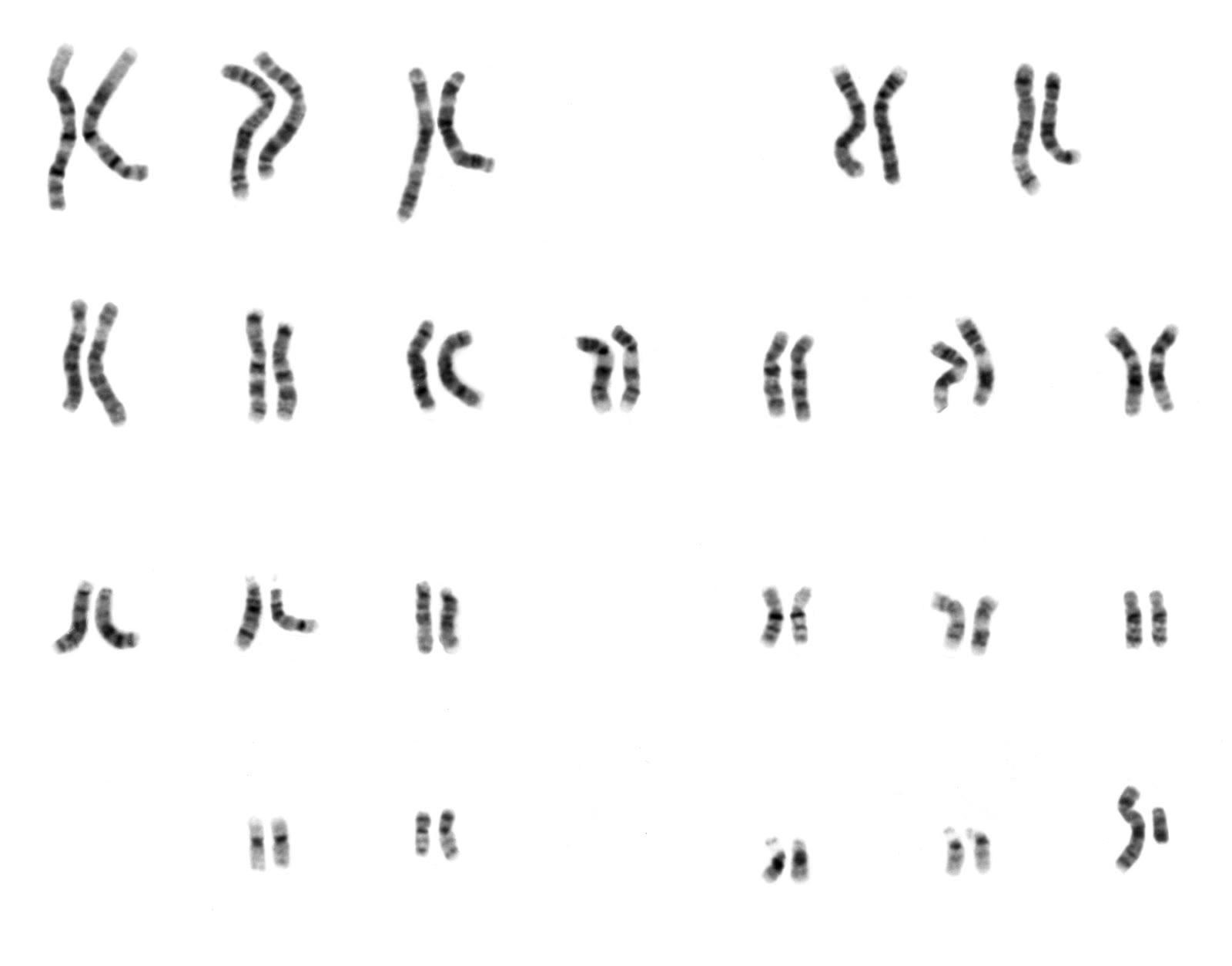
All 46 chromosomes, seen under the microscope
The oldest genetic test and still the right one for some questions. Cells from a blood sample are grown, stopped mid-division, stained and photographed, and the chromosomes are arranged in pairs. The picture shows their number and their large-scale structure.
It detects extra or missing chromosomes such as trisomy 21, Turner and Klinefelter syndrome, and large rearrangements such as balanced translocations, a common hidden cause of recurrent miscarriage. Changes smaller than a few million letters need CNV analysis instead.
- WhoRecurrent miscarriage; infertility; a suspected chromosomal syndrome; prenatal diagnosis; family members of a translocation carrier.
- SampleBlood; amniotic fluid or chorionic villi for prenatal cases.
- ReportThe karyotype in standard notation, with an explanation of any change and what it means for the person and their relatives.
A few drops of blood in the first days, for conditions that can be treated
Some inherited conditions show no signs at birth but cause lasting harm if treatment starts late, and are manageable if it starts early. Newborn screening looks for exactly those, from a heel-prick blood spot taken in the first days of life.
The classic screen covers conditions such as phenylketonuria, congenital hypothyroidism and cystic fibrosis. An expanded genetic screen reads the genes behind a much longer list, including spinal muscular atrophy, where early treatment changes the outcome. A screen-positive result is always confirmed before any decision.
- What it readsMetabolic and genetic markers for treatable childhood conditions; the expanded version sequences the responsible genes.
- WhoEvery newborn, ideally within the first week.
- SampleA heel-prick blood spot on a filter card.
- ReportScreen negative, or screen positive with the confirmatory test and the specialist to see. A geneticist explains either.
Common questions
Turnaround, prices and the exact gene lists are confirmed by the laboratory before launch.
Panel, exome or genome: what is the difference?
Depth. A panel reads a chosen list of genes; the exome reads the coding part of all of them; the genome reads everything, including the regions between genes. Wider is not automatically better: it takes longer, costs more and finds more variants of uncertain meaning. The geneticist matches the depth to the question.
What does the "c" in cWES and cWGS stand for?
Clinical. The sequencing is done in an accredited laboratory with a validated process, variants are classified to international criteria, and a clinical geneticist signs a report that can be used for medical decisions. Research-grade sequencing does not meet those requirements.
What is a variant of uncertain significance?
A change whose effect is not yet known. Most are later shown to be harmless. It is reported honestly, explained, and reviewed again as knowledge grows; it is not a diagnosis.
Will you tell me about things I did not ask about?
Only if you choose. For exome and genome sequencing you decide at counselling whether you want secondary findings in a defined list of medically actionable genes reported.
Can a child be tested?
Yes, with the consent of both parents or legal guardians, and usually because the result will guide the child's care. Testing children for adult-onset conditions is discussed carefully and often deferred.
How long does it take?
From days for a karyotype or a small panel to several weeks for a genome. The exact turnaround is confirmed when you call.
Alongside these analyses
Prenatal screening, relationship testing and tumour profiling use the same laboratory.
Not sure which one? That is what the first conversation is for.
Call and describe the situation. A geneticist will say which analysis answers it, what sample is needed and how long it takes.
Descriptions are general and educational; gene lists, resolution, turnaround, prices and accreditation details are confirmed by the laboratory before launch. Genetic testing is done with informed consent and, for children, the consent of both parents or guardians. Results are interpreted by a clinical geneticist in the context of the person's history and are not a substitute for medical care.